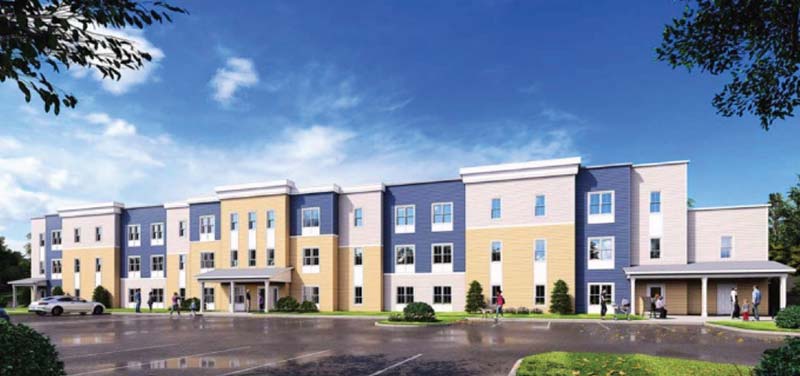
Henry Meadows is a newly constructed, 34‑unit affordable housing development supporting seniors age 62 and older in Tunkhannock Township, Wyoming County, Pennsylvania. The three‑story property will provide one‑ and two‑bedroom apartments affordable to households earning between 20% and 60% of area median income, addressing a pressing need for senior housing options. The unit mix includes 31 one‑bedroom units and three two‑bedroom units, with six apartments designed to be fully accessible and one unit equipped for residents with hearing or vision impairments.
The property is located within an established residential area on the western edge of the township in a region known as the “Gateway to the Endless Mountains.” Development of the site takes advantage of existing infrastructure while preserving significant green space, limiting sprawl and reducing public service costs associated with new development in rural areas.
Henry Meadows is designed to support independent living for older adults while reducing future demand on higher‑cost institutional care. Indoor and outdoor common areas provide space for resident engagement without requiring off‑site travel, supporting aging‑in‑place in a rural setting. Supportive services will be provided onsite by Trehab, a regional nonprofit with experience in senior housing and services.
Henry Meadows supports local construction employment and contributes to long‑term community stability by allowing seniors to remain in their home community.